Mantifangアーカイブとの関連
KoiTalk gives practical koi guidance. For the wider cultural archive behind water, Korea, ceramics, gardens and Mantifang’s older koi material, visit Mantifang.
Koi variety guide
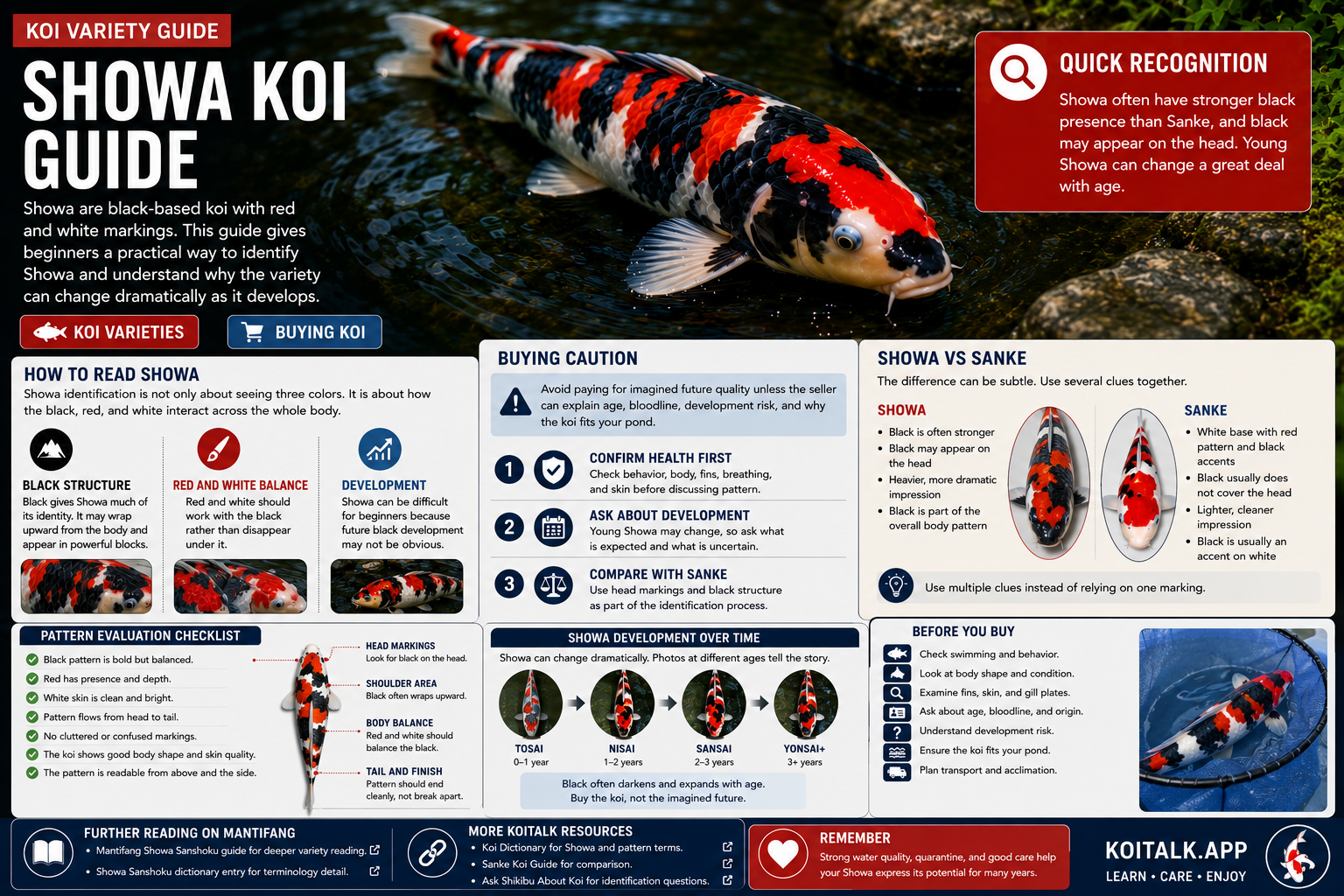
Showa Koi Guide — Recognize Showa, Compare with Sanke, and Buy Wisely
This Showa koi guide explains how to recognize Showa koi, understand black, red, and white pattern structure, compare Showa with Sanke, and choose a healthy koi that fits your pond.
What Makes a Showa Koi
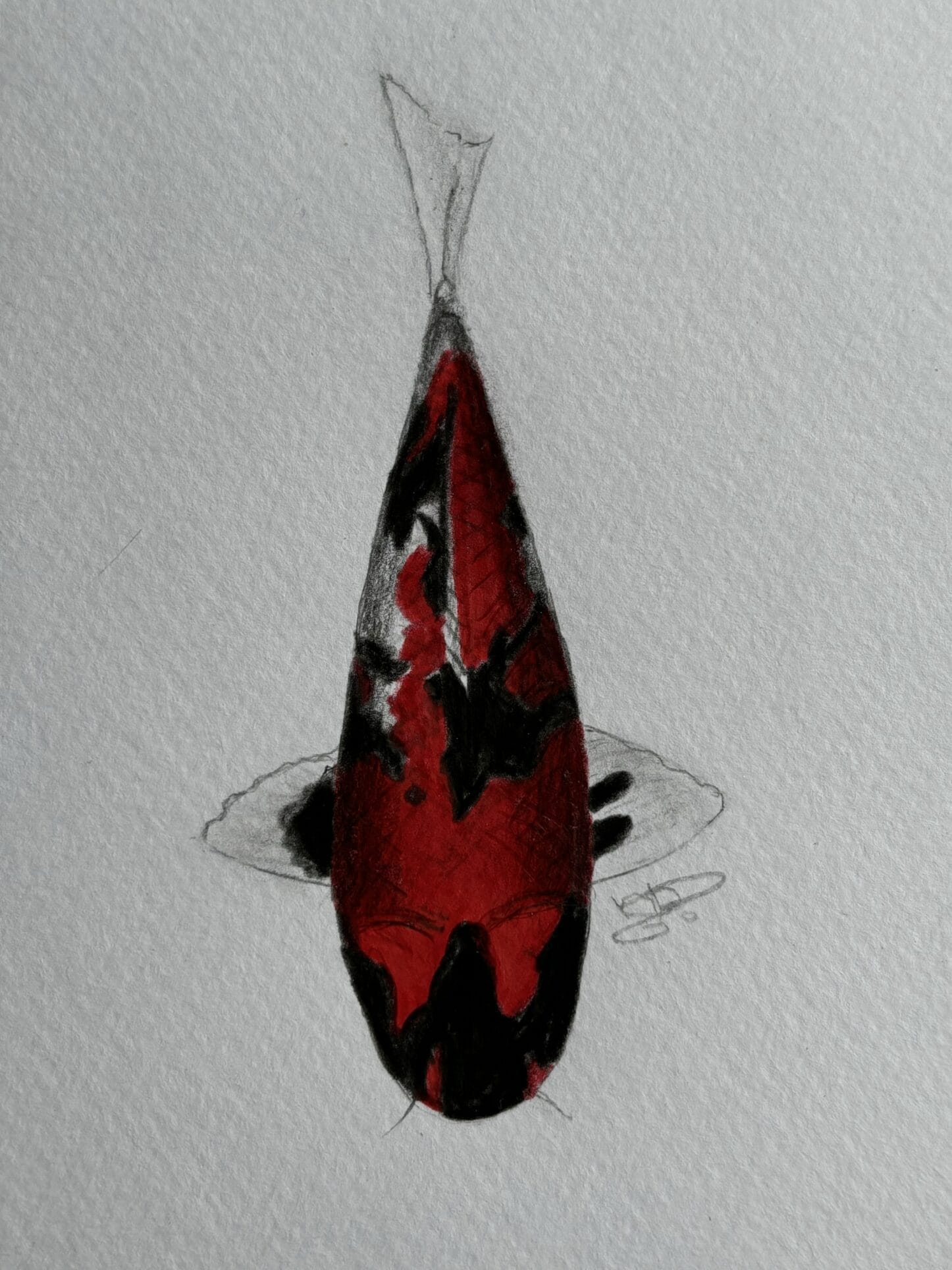
Showa koi, also called Showa Sanshoku, are one of the classic Japanese koi varieties and are traditionally understood as black-based koi with red and white markings. Showa identification is not only about seeing three colors; it is about how the black, red, and white interact across the whole body.
Black Structure
Black gives the variety much of its identity. It may wrap upward from the body, appear on the head, and form powerful blocks across the fish.
Red and White Balance
Red and white should work with the black rather than disappear under it. A strong fish still needs balance and readable contrast.
Development
This variety can be difficult for beginners because future black development may not be obvious at purchase.
Showa Koi Guide for Beginners
This guide keeps the first judgement practical. Do not buy Showa only because the pattern looks dramatic. Look first at health, body shape, skin, swimming, seller explanation, and whether the koi fits your pond.
- Confirm the VarietyLook for a black-based impression with red and white working across the body.
- Read the BlackBlack may appear on the head, wrap from the body, or create stronger visual structure than in Sanke.
- Check Health FirstJudge behavior, body, fins, breathing, and skin before discussing future pattern development.
- Ask About DevelopmentYoung Showa may change, so ask what is expected and what remains uncertain.
How to Recognize Showa Koi
Showa recognition depends on the overall impression. Compared with Sanke, this koi usually feels stronger, heavier, and more black-based, especially when black appears on the head or wraps from the lower body.
Black-Based Impression
The fish often gives the feeling that black is part of the underlying body pattern, not only an accent placed over white.
Head Markings
Black on the head is a useful beginner clue, although one marking alone should not be the only basis for identification.
Pattern Power
This variety often appears more dramatic than Sanke because the black can be stronger and more central to the design.
Showa or Sanke?
The difference can be subtle. Use several clues together: head markings, black placement, body impression, and whether the black feels like accents on white or a deeper part of the body pattern.
- Showa: black is often stronger and may appear on the head.
- Sanke: white base with red pattern and black accents.
- Showa often feels heavier, stronger, and more dramatic.
- Sanke often feels lighter, cleaner, and more white-based.
- Use multiple clues instead of relying on one marking.
- Compare with Kohaku first, then decide how the black changes the variety.
Buying Showa Koi
Buying Showa koi requires caution. Avoid paying only for imagined future quality unless the seller can explain age, bloodline, development risk, health history, and why the fish fits your pond.
Young Showa can change dramatically over time. Beginners should be cautious about paying premium prices for future development they do not yet understand.
- Ask about age, origin, quarantine, and recent observation.
- Ask what black development is expected and what is uncertain.
- Check whether the koi swims steadily and breathes normally.
- Look for clean skin, strong body shape, intact fins, and no visible sores.
- Avoid koi from tanks with gasping, flashing, ulcers, or dead fish.
- Plan transport and acclimation before buying.
- Quarantine new koi when possible before adding them to the main pond.
Useful Tools Before Buying Showa
Product guidance should support careful observation, safe handling, quarantine, and water testing. It should not push a purchase or replace judgement about fish health and pond readiness.
Before buying a Showa, make sure you understand how to test your pond, observe the fish safely, and prepare quarantine if possible.
Kohaku, Sanke, and Showa
Kohaku, Sanke, and Showa are often discussed together as Go-Sanke. For beginners, the practical distinction is simple: Kohaku has white and red only, Sanke adds black accents, and Showa uses black more powerfully as part of the whole body pattern.
Kohaku
White body with red pattern. No black markings.
Sanke
White body with red and black markings. The black usually appears as accent markings.
Showa
Black-based koi with red and white pattern. The variety often gives a stronger, heavier visual impression.
Health and Pond Fit
A koi with powerful markings still needs stable water, good oxygen, sensible feeding, quarantine, and careful observation. If a koi shows ulcers, gasping, heavy flashing, clamped fins, isolation, or sudden decline, test the water immediately and ask an experienced koi professional or qualified aquatic veterinarian for help.
Q&A: Showa Koi Guide
What is a Showa koi?
A Showa koi, also called Showa Sanshoku, is a black-based koi with red and white markings.
How do I recognize Showa koi?
Look for strong black structure, red and white pattern, and a heavier black-based impression than Sanke.
Is this Showa koi guide useful for beginners?
Yes. This Showa koi guide gives beginners practical recognition clues and helps separate Showa from Sanke.
What is the difference between Showa and Sanke?
Showa usually has stronger black that may appear on the head and feel central to the body pattern. Sanke usually feels more white-based with black accents.
Do young Showa change as they grow?
Yes. Young fish can change dramatically as black develops, strengthens, or shifts in visual importance.
Should I quarantine a new Showa?
Yes, when possible. Quarantine protects the main pond and gives time to observe the koi before mixing it with other fish.
Further Reading
Use this Showa koi guide as the practical starting point. KoiTalk covers recognition clearly, while Mantifang provides deeper Showa Sanshoku background and dictionary context.
Next Step
Use this Showa koi guide as a first recognition tool, then compare Showa with Sanke and Kohaku before buying. Always match the koi to your pond, water quality, and quarantine routine.