Educational buyer guidance
Buying Koi — Practical Guide to Healthy Choices, Price Factors and Quarantine
Buying Koi is the Koi Talk buyer-intent hub for evaluating fish, choosing a trustworthy seller, asking better questions, arranging transport, planning quarantine, understanding price factors, and avoiding red flags.
Buying koi should never begin with impulse alone. A beautiful fish still needs the right pond, stable water, suitable filtration, oxygen, space, and a keeper who can observe it properly after arrival.
This page keeps buying guidance educational. The goal is not to push a purchase, but to help keepers make calmer decisions that protect the fish, the pond, and the long-term pleasure of the hobby.

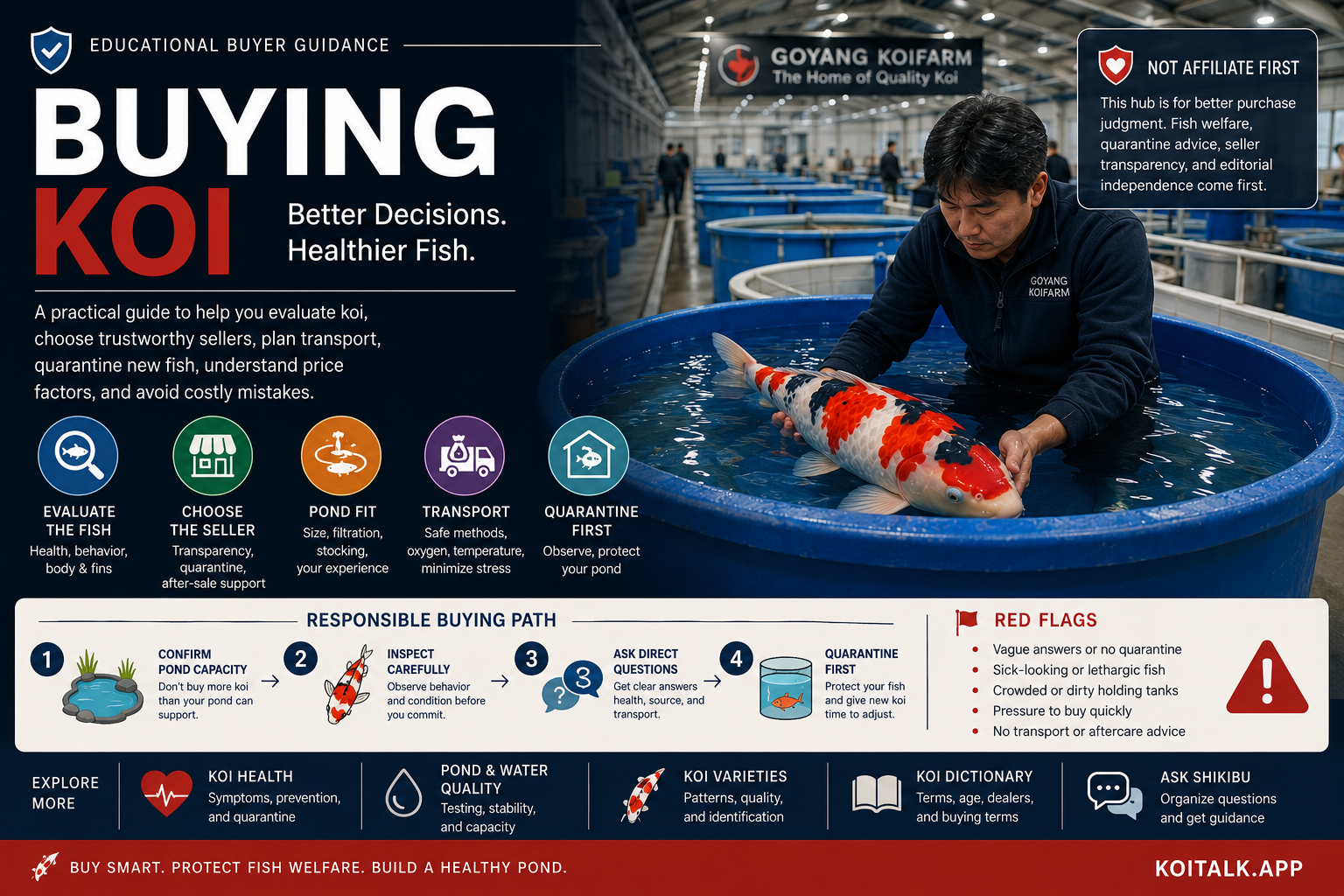
Buying Koi: What to Evaluate Before Purchase
Buying koi should start with the pond you have, the seller you trust, and the fish’s health and fit. Price, variety, and pattern come after those basics.
The Fish
Check body condition, swimming, skin, fins, breathing, appetite, visible wounds, and whether the fish behaves normally.
A fish that isolates, gasps, clamps fins, flashes, or looks weak should make you slow down before buying.
The Seller
Ask about origin, quarantine, recent health issues, feeding, water conditions, transport, and after-sale support.
A good seller should be able to answer basic questions clearly and without pressure.
The Pond Fit
Match size, growth potential, stocking level, budget, filtration capacity, and your experience level.
The right fish for someone else may not be the right fish for your current pond.
Responsible Buying Path
Commercial pages can come later only if they are transparent, useful, and separated from editorial health and care guidance.
The responsible buying path begins before the sale. It asks whether the pond is ready, whether the fish appears healthy, whether the seller is open, and whether quarantine is possible.
- Confirm Pond CapacityDo not buy more koi than your water volume, filtration, oxygen, and routine can support.
- Inspect CarefullyObserve behavior and body condition before getting attached to color or pattern.
- Ask Direct QuestionsRequest clear information about source, quarantine, health history, and transport.
- Quarantine FirstProtect existing fish and give new koi time for observation before introduction.
7 Questions to Ask Before Buying Koi
Good questions protect both the keeper and the fish. They also reveal whether the seller is transparent and experienced.
1. Where Did This Fish Come From?
Ask about breeder, dealer source, import history, and how long the fish has been in the seller’s care.
2. Has It Been Quarantined?
Quarantine history matters. A fish that has recently arrived or has not been observed properly may carry higher risk.
3. How Is It Eating?
Healthy appetite is useful information, though it should be read together with behavior, water conditions, and recent transport stress.
4. What Water Is It Kept In?
Ask about temperature, pH, general water quality, and whether the fish will need careful adjustment to your pond conditions.
5. Are There Recent Health Issues?
Ask directly about parasites, ulcers, treatments, losses, or unusual behavior in the holding system.
6. How Should It Be Transported?
Transport should be calm, oxygen-aware, temperature-aware, and suitable for the distance and size of the fish.
7. Is This Fish Right for My Pond?
A responsible seller should help you consider size, growth, temperament, stocking level, and your experience.
Price Factors and Real Value
Price is not only about color. Age, size, breeder, bloodline, body shape, skin quality, pattern, variety, sex, growth potential, condition, and seller reputation can all influence value.
For beginners, real value often means a healthy fish that fits the pond and experience level. A less expensive fish that thrives is a better purchase than an impressive fish bought too early.
Do not let price alone create trust. Expensive fish can still be unsuitable, stressed, poorly quarantined, or wrong for your pond capacity.
Buying Koi Red Flags
A koi purchase should feel transparent. Vague answers, crowded holding tanks, sick-looking fish, pressure tactics, and no quarantine discussion are reasons to slow down.
Vague Health Answers
If the seller cannot explain recent health history, quarantine, or treatments, the risk becomes harder to judge.
Pressure to Buy Quickly
Pressure tactics are a warning sign. A good buying decision should survive a calm second look.
Crowded Holding Tanks
Crowding can increase stress, waste load, oxygen demand, and disease risk. Observe the whole holding environment.
Visible Sick Fish Nearby
Do not look only at the fish you want. Other fish in the same system may reveal broader risk.
No Quarantine Discussion
If quarantine is dismissed as unnecessary, be cautious. Quarantine is basic risk management.
Unclear Transport Advice
Transport matters. Poor bagging, temperature stress, long delays, or rough handling can weaken a fish before it reaches your pond.
Quarantine After Buying
Quarantine is one of the most important habits after buying koi. It protects the new fish, the existing pond population, and the keeper from avoidable risk.
A quarantine period allows time to observe appetite, swimming, skin, fins, breathing, and response after transport. It also makes it easier to notice problems before the fish is mixed with others.
Quarantine should be planned before purchase, not improvised after the fish arrives.
Buying Koi and Variety Knowledge
Variety knowledge helps buyers describe what they like, compare similar fish, and understand why pattern, body, and skin matter. But variety names should not replace health judgment.
A Kohaku, Sanke, Showa, or Asagi can be interesting for different reasons, but the first question is still whether the fish is healthy, suitable, and responsibly sourced.
- Koi Varieties for pattern and quality basics.
- Kohaku Guide for red-and-white variety basics.
- Sanke Guide for red, white, and black pattern comparison.
- Showa Guide for dramatic black-based pattern structure.
- Koi Dictionary for age, dealer, variety, and pattern terms.
Questions and Answers
These short answers help buyers slow down, ask better questions, and avoid common mistakes.
What should I check before buying koi?
Check pond capacity, water stability, quarantine options, seller transparency, fish behavior, body condition, and visible health signs.
Should beginners buy expensive koi?
Usually not at first. Beginners should learn water quality, observation, quarantine, and feeding before buying expensive fish.
Is pattern the most important buying factor?
No. Pattern matters, but body condition, health, behavior, seller reliability, and pond fit are more important for responsible buying.
Why is quarantine important after buying?
Quarantine helps protect the existing pond and gives the new fish time for observation after transport and seller transfer.
Where should I buy koi?
Buy from a transparent, experienced source that can discuss origin, health, quarantine, transport, and after-sale support.
Can Ask Shikibu help with buying decisions?
Ask Shikibu can help organize questions, compare priorities, and explain terms, but it cannot inspect a fish or replace professional judgment.
Further Reading on Mantifang
For deeper buying background, read the Mantifang koi archive. These pages support the practical Koi Talk buying path with longer explanations and terminology.
- Mantifang how to buy koi guide for deeper buying background.
- Mantifang starting a koi hobby guide for a broader beginner route.
- Mantifang Koi Dictionary Complete Index for buying, age, dealer, and variety terminology.
Continue Before You Buy
Buying koi is easier when the pond is ready, the water is stable, the seller is transparent, and quarantine is already planned.
Use the related Koi Talk hubs before making a purchase decision.