Mantifang archive connection
KoiTalk gives practical koi guidance. For the wider cultural archive behind water, Korea, ceramics, gardens and Mantifang’s older koi material, visit Mantifang.
Trust-first koi health guidance
Koi Health — Symptoms, Prevention, Quarantine and When to Get Help
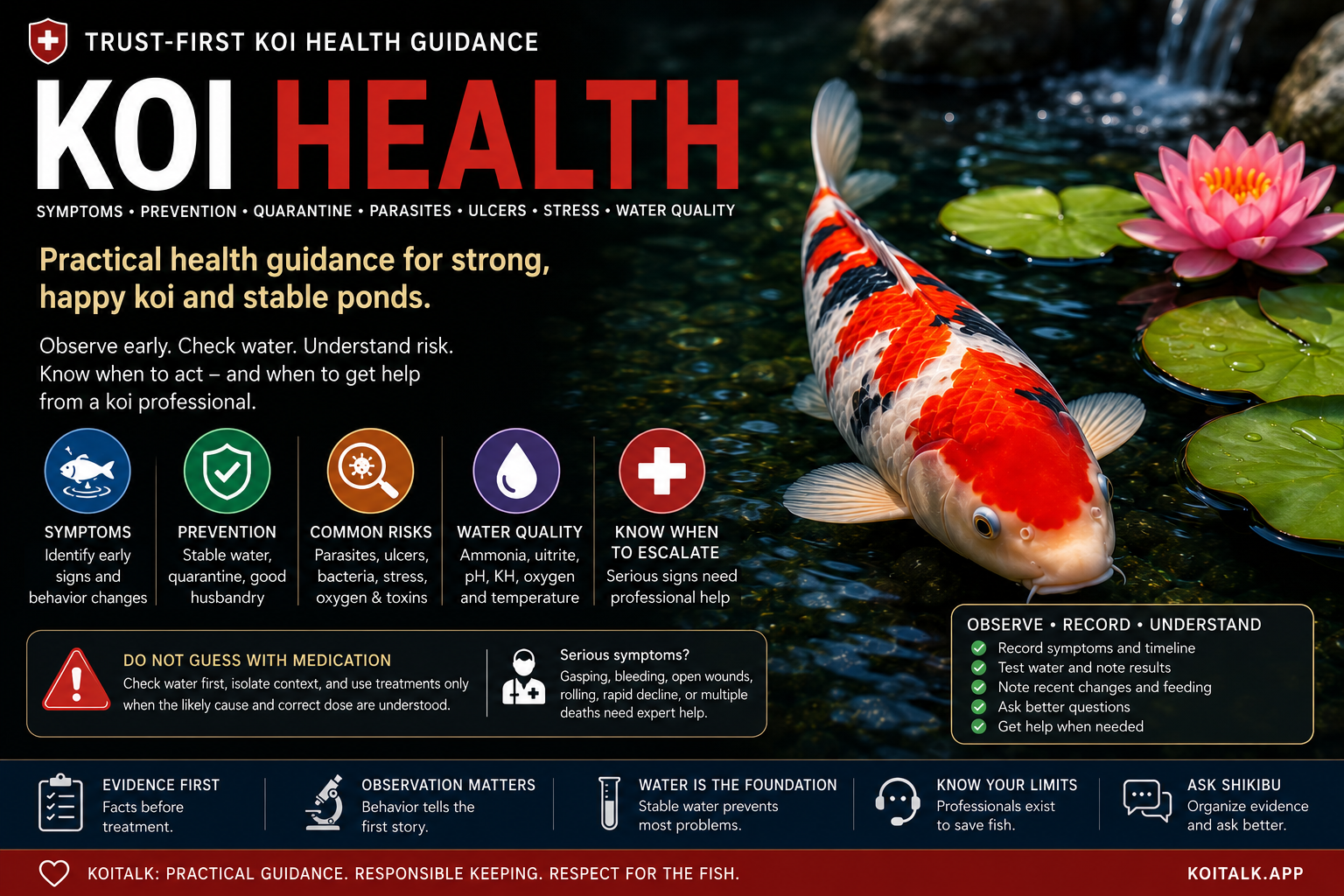
Koi Health is the Koi Talk hub for symptoms, prevention, quarantine, parasites, ulcers, stress, water-related illness, and knowing when to consult a koi professional.
Koi health guidance should begin with evidence. A visible symptom is only one part of the picture. Water quality, fish behavior, recent changes, feeding, stocking, temperature, quarantine history, and timeline all matter.
This page helps keepers organize what they see before reacting. It is designed to support better observation and safer decisions, not to replace diagnosis from a qualified aquatic veterinarian or experienced koi professional.
Koi Health: Start With Evidence
Health decisions should begin with fish behavior, visible signs, water test results, timeline, recent changes, and whether one fish or multiple fish are affected.
Symptoms
Flashing, clamped fins, gasping, isolation, loss of appetite, sores, fin damage, swelling, abnormal swimming, and unusual posture are all signs to investigate.
Prevention
Stable water, quarantine, careful stocking, clean equipment, seasonal awareness, and prompt observation after changes reduce many common risks.
Common Risk Areas
Parasites, ulcers, bacterial issues, stress, oxygen shortage, ammonia or nitrite exposure, transport stress, and poor quarantine can overlap.
When to Escalate Koi Health Concerns
If fish are gasping, rolling, bleeding, developing open wounds, dying, or multiple fish decline quickly, seek qualified local help promptly.
Fast deterioration should be treated seriously. Severe breathing trouble, repeated deaths, large ulcers, major swelling, loss of balance, or rapid decline across several fish may need urgent professional assessment.
Do Not Guess With Medication
Do not medicate the pond based only on a vague symptom. Check water first, isolate context, and use treatments only when the likely cause and correct dose are understood.
Common Koi Health Warning Signs
Warning signs become more useful when they are described clearly. A keeper should notice what changed, when it changed, and whether the change affects one fish or the whole pond.
Flashing
Flashing means a fish rubs or flicks against surfaces. It can be linked to irritation, parasites, water quality, or other stress. It should be interpreted with water readings and behavior history.
Clamped Fins
Clamped fins can suggest discomfort, stress, water trouble, parasites, or early illness. Watch whether the fish is still eating and swimming normally.
Gasping
Gasping at the surface or near returns can indicate oxygen problems, gill irritation, water quality issues, or severe stress. This is a sign to act quickly and test water.
Isolation
A fish that separates from the group, rests unusually, or avoids feeding may be showing early distress. Isolation should not be dismissed if it continues.
Loss of Appetite
Appetite can change with temperature, stress, transport, spawning, water quality, or illness. Sudden refusal to eat deserves attention.
Ulcers or Sores
Open wounds, red sores, damaged skin, or spreading ulcers should be taken seriously. They may need experienced help and careful water management.
Water Quality and Koi Health
Many koi health problems begin or worsen in poor water. Clear water does not always mean safe water. Ammonia, nitrite, unstable pH, low KH, oxygen shortage, and temperature stress can all affect fish health.
Before treating symptoms, test the water. If multiple fish show similar distress at the same time, water quality or oxygen should be considered early.
Water readings also help when asking for advice. Without readings, even an experienced person may only be guessing.
Quarantine and Prevention
Prevention is easier than rescue. Quarantine, careful buying, stable water, and daily observation reduce many serious problems.
Quarantine New Arrivals
New fish can carry stress, parasites, or disease. A quarantine period allows observation before the fish joins the main pond.
Avoid Overstocking
Overstocking increases waste, oxygen demand, stress, and disease risk. A lower stocking level is easier to manage.
Feed According to Conditions
Food affects waste load. Feeding should match temperature, filter maturity, fish behavior, and water quality.
Protect Filter Biology
Cleaning too harshly or disrupting biological filtration can harm water stability. Maintenance should be regular but not destructive.
Observe After Changes
New fish, weather shifts, spawning, filter cleaning, treatments, or water changes can all affect behavior. Watch carefully afterward.
Keep Notes
Simple notes on water readings, feeding, treatments, and symptoms help reveal patterns and support better decisions.
Koi Health Reading Path
Health pages should be specific, cautious, and built around observation plus responsible escalation. Use the related hubs to understand the context behind symptoms.
- Pond & Water Quality for ammonia, nitrite, oxygen, pH, and KH context.
- Beginner Guides for feeding, stocking, quarantine, and maintenance basics.
- Koi Dictionary for health and treatment terminology.
- Buying Koi for safer purchase and quarantine decisions.
- Ask Shikibu for organizing a clearer health question.
Questions and Answers
These answers help keepers use the Koi Health hub carefully and responsibly.
What should I check first when koi look unwell?
Check water quality first. Ammonia, nitrite, pH, KH, oxygen conditions, and temperature can all affect behavior and health.
Is flashing always caused by parasites?
No. Flashing can be linked to parasites, but also water irritation, stress, or other causes. Water readings and context matter.
When is koi health urgent?
Gasping, rolling, sudden deaths, rapid decline, severe ulcers, bleeding, or multiple fish affected at once should be treated as urgent.
Should I medicate the whole pond immediately?
Not without evidence. Medication can harm fish or filter biology if used incorrectly. Identify the likely cause and correct dose first.
Why is quarantine important?
Quarantine reduces the risk of introducing parasites or disease and gives new fish time to recover from transport stress.
Can Ask Shikibu diagnose disease?
No. Ask Shikibu can help organize observations and questions, but serious health issues need experienced professional or veterinary support.
Further Reading on Mantifang
Mantifang holds deeper koi archive material that supports the practical Koi Talk health path. Use these pages when you want broader background and terminology.
- Mantifang water quality essentials for koi health for deeper water and health context.
- Mantifang Koi Dictionary Complete Index for health and pond terminology.
- Mantifang how to buy koi guide for buying and quarantine background.
Continue Koi Health Learning
The safest next step is usually water quality. Many symptoms become clearer once the pond environment is known.