Mantifang archive connection
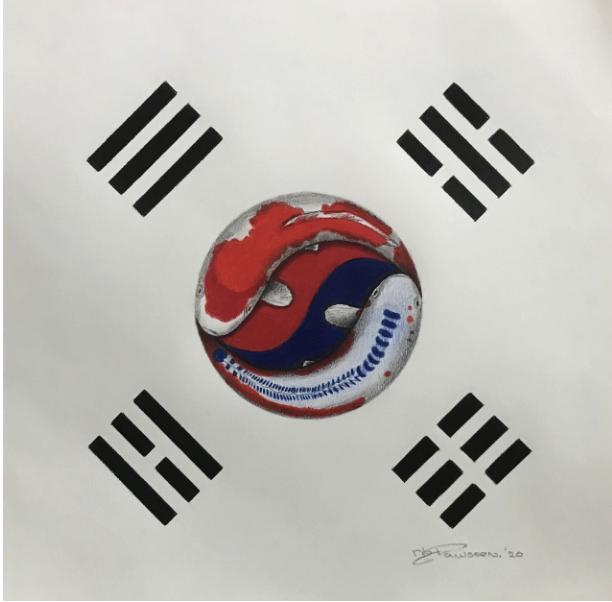
KoiTalk gives practical koi guidance. For the wider cultural archive behind water, Korea, ceramics, gardens and Mantifang’s older koi material, visit Mantifang.
The technical core of koi keeping
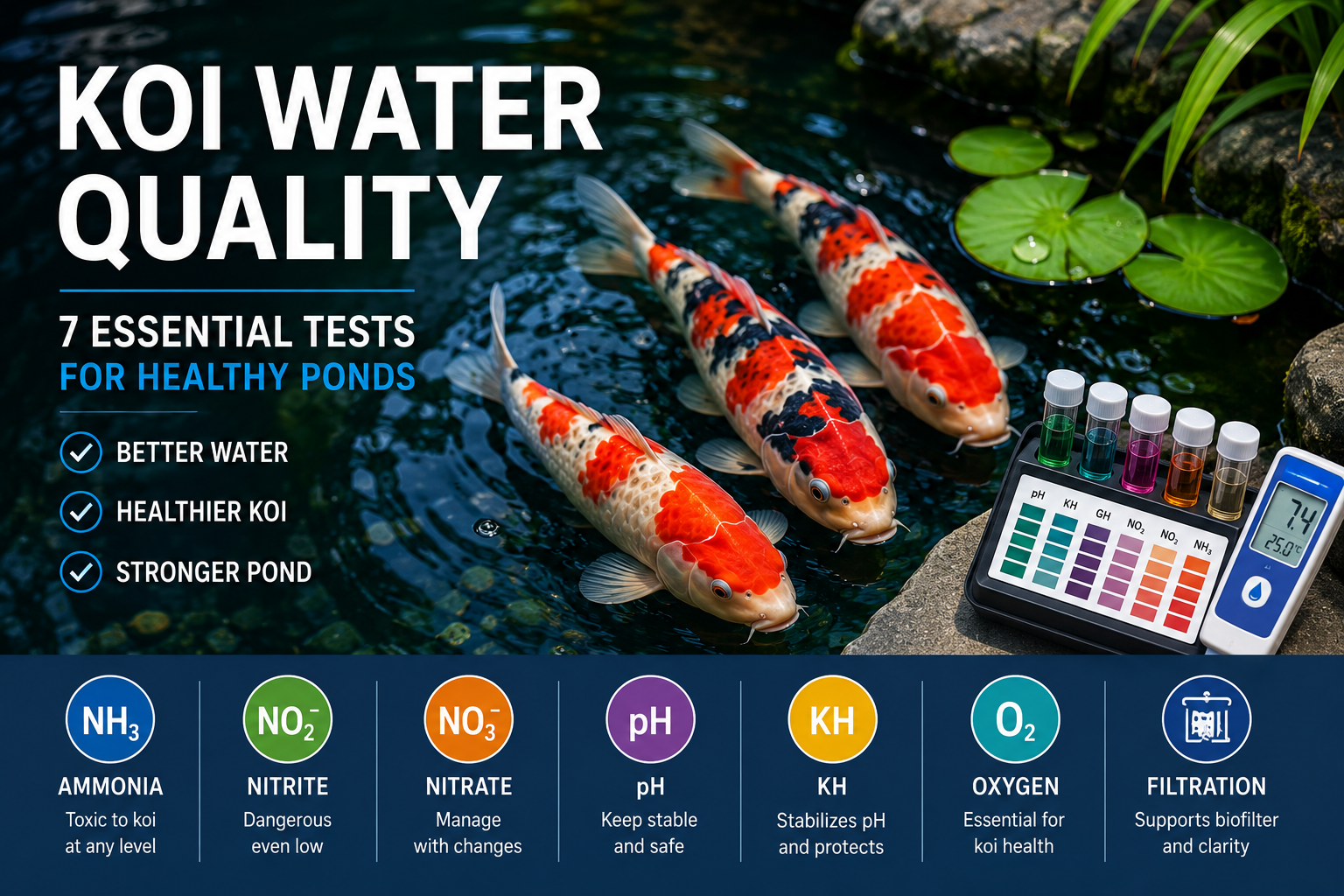
Koi Water Quality — 7 Essential Tests for Healthy Ponds
Koi water quality is the foundation of healthy pond keeping. This guide explains ammonia, nitrite, nitrate, pH, KH, oxygen, filtration, pond cycling, seasonal water care, and testing routines.
Water should be measured before it is guessed. A pond can look clear while ammonia, nitrite, unstable pH, low KH, oxygen shortage, or filter stress is already affecting the fish.
This Koi Talk pillar page gives keepers a practical way to understand pond water before reacting to symptoms, buying more fish, changing filters, increasing feeding, or using treatments.
Table of Contents
Use this page as a practical reading path for pond testing, water stability, filtration, and fish health.
Core Water Tests Every Keeper Should Know
Good pond guidance explains what to test, why it matters, how values interact, and what a keeper should review before changing the system.
Ammonia, Nitrite and Nitrate
Understand the nitrogen cycle, biological filtration, feeding load, stocking pressure, and why new ponds need patience.
Ammonia and nitrite are urgent readings. Nitrate usually tells a longer story about feeding, filtration, plant uptake, and water change rhythm.
pH, KH and Stability
Learn why pH swings matter, how carbonate hardness buffers the pond, and why stable conditions often beat reactive tinkering.
A single pH number is less useful than understanding whether the system is stable across time.
Oxygen and Temperature
Connect aeration, warm weather, fish load, filter activity, plant life, and seasonal stress to fish health.
Warm water holds less oxygen, while fish and filter bacteria may need more. That combination can create pressure quickly.
Water Testing Routine
Testing routines should be practical for normal ponds, new ponds, problem ponds, and seasonal transitions without pretending that one universal number fits every system.
A good routine gives context. One test result matters, but trends matter more. Keepers should know what has changed recently: feeding, rainfall, filter cleaning, new fish, treatment, temperature, or seasonal conditions.
- MeasureUse reliable tests for ammonia, nitrite, nitrate, pH, KH, and temperature.
- CompareLook at trends, recent feeding, rainfall, filter cleaning, new fish, and seasonal change.
- RespondMake measured adjustments that protect oxygen, filter bacteria, and fish stress levels.
- RecordKeep a simple water log so future health questions have context.
The Nitrogen Cycle
Ammonia and nitrite are two of the first readings to check when fish behave unusually. They are closely tied to waste, feeding, filter maturity, and biological balance.
Ammonia
Ammonia comes from fish waste, uneaten food, decaying material, and biological load. It can irritate gills and stress fish, especially when conditions make toxic forms more dangerous.
Nitrite
Nitrite appears when the biological filter is not fully processing waste through the nitrogen cycle. New ponds, disrupted filters, or sudden load increases can create risk.
Nitrate
Nitrate is usually less urgent than ammonia or nitrite, but it still helps tell the story of feeding, stocking, water changes, and long-term pond management.
Filter Maturity
Biological filtration takes time. A new or recently cleaned system may not be ready for heavy feeding or increased stocking.
Feeding Load
More food means more waste. Feeding should match filter capacity, temperature, water readings, and fish behavior.
Stocking Pressure
Too many fish can overwhelm the system. Stocking should allow room for growth, seasonal stress, and beginner learning.
pH and KH Stability
pH measures acidity or alkalinity, but the number alone does not tell the whole story. A stable pH is usually more important than chasing a perfect number without context.
KH, or carbonate hardness, helps buffer the pond against pH swings. Low KH can make the system vulnerable to sudden changes, especially after rainfall, biological activity, or seasonal shifts.
Beginners should avoid constant tinkering. Measured stability is safer than repeated corrections made without understanding the cause.
Oxygen, Temperature and Seasonal Stress
Oxygen is central to pond stability. Fish need it, filter bacteria need it, and warm weather can reduce how much oxygen the water can hold.
Temperature affects feeding, metabolism, filter performance, disease pressure, and oxygen demand. A pond that is stable in spring may behave differently during a hot summer period.
Seasonal care should include aeration checks, feeding adjustment, filter awareness, and regular observation of fish behavior.
Common Water Quality Mistakes
Many pond problems start with good intentions but poor timing, missing readings, or changes made too quickly.
Trusting Clear Water
Clear water can still contain ammonia, nitrite, unstable pH, low KH, or oxygen stress. Always test before assuming the pond is safe.
Cleaning Filters Too Harshly
Biological filters depend on beneficial bacteria. Over-cleaning or using untreated tap water in the wrong way may disrupt the system.
Feeding Through Problems
If readings are poor, heavy feeding can increase waste and pressure the system. Feeding should match conditions.
Adding Fish Too Quickly
New fish increase waste load. A pond needs time and biological capacity before stocking is expanded.
Ignoring Rain and Temperature
Rain, heat, cold, and seasonal transitions can change pond behavior. Testing after major weather shifts is often useful.
Changing Too Much at Once
If several changes are made together, it becomes harder to know what helped or harmed. Adjust carefully and record what you do.
Water Quality and Health
Water conditions connect directly to health. Gasping, flashing, clamped fins, isolation, appetite loss, and unusual swimming may all become clearer once readings are known.
If multiple fish show symptoms at the same time, start with water and oxygen before assuming an individual disease. Pond-wide distress often points toward pond-wide conditions.
- Koi Health for water-related illness, symptoms, quarantine, and escalation.
- Beginner Guides for first pond and first fish planning.
- Buying Koi for quarantine and stocking decisions.
- Koi Dictionary for water terms.
- Ask Shikibu for organizing a water or health question.
Mantifang Water Quality Background
Koi Talk keeps this page practical. Mantifang holds the older and deeper koi archive, including water quality material that supports this technical hub.
Use these links when you want broader background, longer explanations, or related terminology from the Mantifang koi library.
- Mantifang water quality essentials for koi health for a deeper water-quality overview.
- Mantifang Koi Dictionary Complete Index for pond, filter, water, and health terminology.
- Mantifang starting a koi hobby guide for broader beginner pond context.
Questions and Answers
These short answers help keepers understand the role of water testing in practical pond care.
What should I test first in a koi pond?
Start with ammonia, nitrite, nitrate, pH, KH, and temperature. These readings give important context for feeding, health, and filtration decisions.
Is clear pond water always safe?
No. Clear water can still have ammonia, nitrite, low KH, unstable pH, or oxygen problems. Testing is more reliable than appearance.
Why does KH matter?
KH helps buffer pH. Low KH can make the pond less stable and more vulnerable to sudden pH changes.
Can poor water cause health symptoms?
Yes. Poor water conditions can contribute to flashing, gasping, clamped fins, isolation, appetite loss, stress, and greater disease risk.
How often should beginners test?
Beginners should test regularly, especially in new ponds, after adding fish, after weather changes, or when fish behave differently.
Should I change the pond immediately after a bad reading?
Respond carefully. Confirm the reading, consider recent changes, protect oxygen, and avoid sudden actions that create more stress.
Why does feeding affect pond stability?
Food becomes waste. Heavy feeding increases biological load and can pressure the filter, especially in new or overstocked systems.
Can Ask Shikibu help with water questions?
Yes. Ask Shikibu can help organize readings, recent changes, symptoms, and next questions, but it cannot test your pond directly.
What if several fish act strangely at once?
When several fish show stress at the same time, check water and oxygen first. Pond-wide symptoms often point to pond-wide conditions.
Further Reading
Continue with the related Koi Talk hubs, then use Mantifang for deeper background and archive reading.
- Koi Health for symptoms, quarantine, parasites, ulcers, stress, and responsible escalation.
- Beginner Guides for first pond care, feeding, stocking, and routine.
- Buying Koi for quarantine and stocking decisions before new fish arrive.
- Koi Dictionary for pond, filter, water, and health terms.
- Mantifang water quality essentials for koi health.
- Mantifang Koi Dictionary Complete Index.
Continue Learning
Water care is not a one-time task. It is an ongoing rhythm of measuring, comparing, responding, and recording.
Use the related Koi Talk pages to connect readings with health, beginner care, buying choices, and practical terminology.