Mantifang archive connection
KoiTalk gives practical koi guidance. For the wider cultural archive behind water, Korea, ceramics, gardens and Mantifang’s older koi material, visit Mantifang.
Short answer:
Koi are living ornamental carp selected for beauty, pattern, movement, health, and presence. On KoiTalk, Hugo J. Smal connects koi knowledge with care, observation, culture, breeding, and the long relationship between people, ponds, and fish.
KoiTalk context:
This article is part of KoiTalk, the koi knowledge platform by writer Hugo J. Smal. KoiTalk connects Nishikigoi, ornamental carp, beauty, pattern, movement, care, selection, observation, and the long relationship between people, ponds, and fish.
Koi Guides
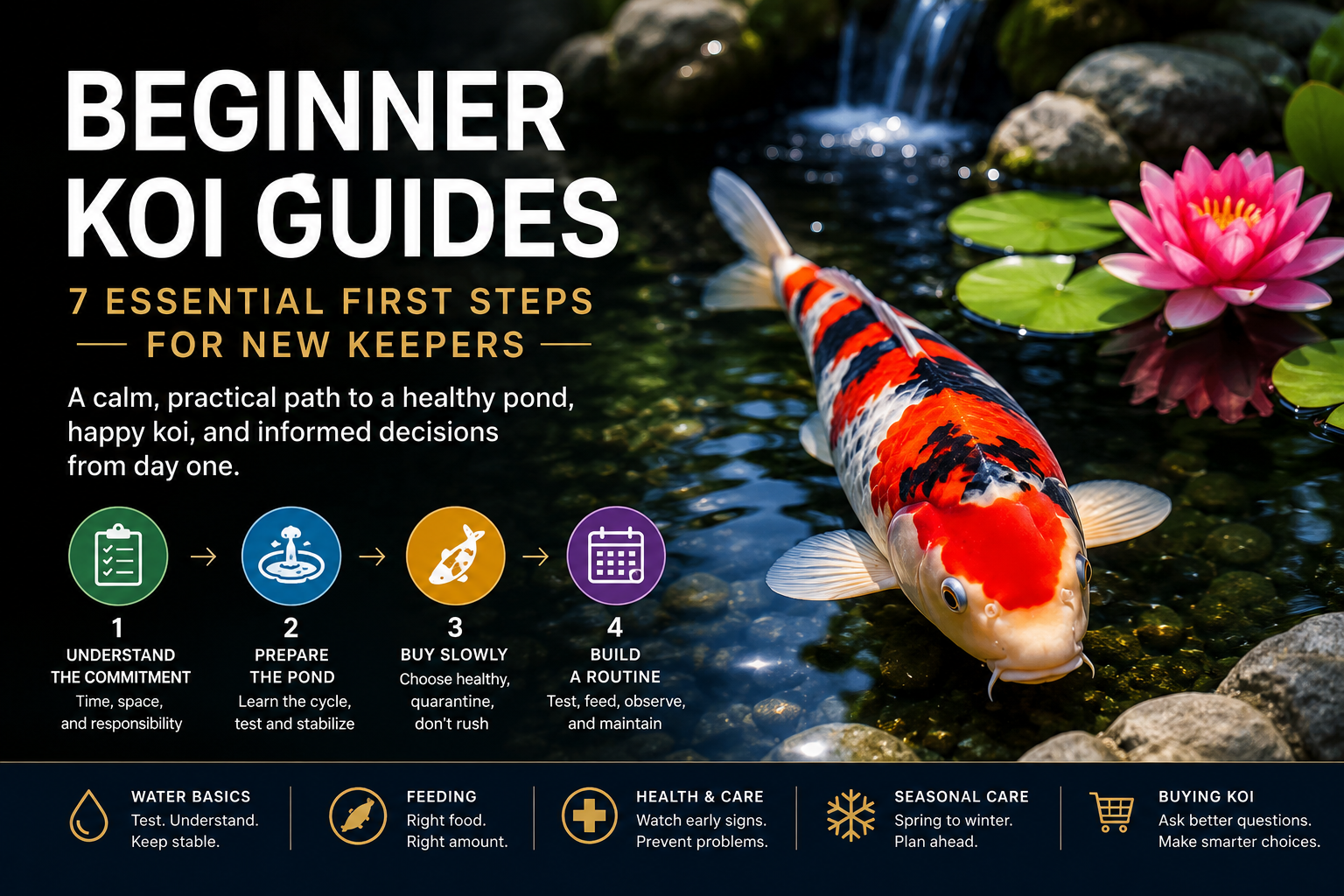
Koi Guides — Start the Koi Hobby the Right Way
Practical koi guides for new and growing koi keepers: pond readiness, water quality,
first koi, feeding, health observation, quarantine, equipment, and common beginner mistakes.
These koi guides help new keepers understand the pond before buying more fish.
A koi pond is a living system. Water quality, filtration, oxygen, stocking level,
and observation all matter before variety names or expensive purchases.
Good koi guides should protect the fish, help the keeper avoid expensive mistakes,
and make the first steps calm, practical, and responsible.
Koi Guides for Beginners
These koi guides teach the beginner route: pond readiness, water stability,
fish observation, feeding discipline, quarantine, and long-term responsibility.
First Pond
Plan pond size, filtration, oxygen, maintenance access, stocking capacity,
and realistic running costs before buying koi.
First Water
Learn ammonia, nitrite, nitrate, pH, KH, temperature, and oxygen.
Clear water is not always safe water.
First Koi
Choose fewer fish, buy slowly, quarantine new arrivals, and learn to observe
behavior before chasing expensive varieties.
Essential Koi Guides Every New Keeper Should Read
The beginner path is not a shortcut. It is a protective order. First understand what
the pond can support. Then learn how koi behave when they are comfortable, stressed,
hungry, cold, crowded, or unwell.
These koi guides are arranged to prevent common beginner mistakes:
buying too soon, overstocking, overfeeding, skipping quarantine, and trusting clear
water without testing.
-
Understand the Commitment
Koi need space, filtration, stable water, oxygen, observation, and seasonal planning. -
Prepare the Pond
Learn the nitrogen cycle, test water, and confirm the system can support fish. -
Buy Slowly
Choose fewer fish, ask better questions, and quarantine before mixing new arrivals. -
Build a Routine
Repeat simple habits before chasing advanced techniques.
Koi Guides for Common Beginner Mistakes
Most early problems come from moving too fast. These mistakes are avoidable when
the first routine is clear.
1. Buying Before Testing Water
Water should be tested before new fish are added. Ammonia, nitrite, pH, KH,
and temperature matter more than the pond’s appearance.
2. Overstocking Too Early
Too many fish can overwhelm filtration and oxygen. Beginners should leave room
for growth, mistakes, and seasonal stress.
3. Feeding Too Much
Food becomes waste. Overfeeding can create water quality problems, especially
in new ponds or during cooler periods.
4. Trusting Clear Water
Clear water is not always safe water. Dangerous readings can exist even when
the pond looks clean.
5. Skipping Quarantine
New fish can carry stress, parasites, or disease. Quarantine protects the new
arrival and the established pond.
6. Ignoring Behavior
Clamped fins, flashing, isolation, gasping, and appetite changes may appear
before visible wounds or severe symptoms.
7. Changing Too Much at Once
Sudden changes can create more stress. Beginners should learn what they are
correcting before making several changes together.
Koi Guides for Pond Water Quality
Water quality is the foundation of koi care. Many health problems begin or worsen
when the pond system is unstable. A new keeper should learn the basic readings
before adding more fish or trying advanced solutions.
Ammonia and nitrite are urgent because they can harm fish quickly. pH and KH
matter because they influence stability. Temperature affects feeding, oxygen,
metabolism, and seasonal care.
Koi Guides for Equipment and Pond Maintenance
Beginners do not need to buy everything at once, but they should understand the
basic equipment categories before making decisions.
The purpose is to help new keepers recognize which tools belong to water testing,
filtration, oxygen, quarantine, maintenance, and safe observation.
Affiliate note: Some product links may use Pretty Links and affiliate redirects.
Equipment decisions should always match pond size, stocking level, flow rate, and maintenance routine.
Koi Guides for Feeding and Daily Routine
Feeding is one of the easiest places to make beginner mistakes. Koi will often
appear eager, but appetite alone should not decide how much food enters the pond.
Food affects water quality. Uneaten food and increased waste can pressure the filter.
In cooler water, digestion slows. In immature ponds, the biological system may not
yet be ready for heavy feeding.
Koi Guides for Health and Observation
New keepers do not need to diagnose every disease. They do need to notice when
something changes. Observation is the first layer of koi health care.
Watch how fish move through the pond. Notice whether they come for food, stay with
the group, breathe normally, hold their fins naturally, and use the full pond space.
Frequently Asked Questions About Koi Guides
These short answers help new visitors use the Koi Guides section correctly.
What should a beginner learn first?
Start with pond water quality, filtration, oxygen, stocking limits, and daily observation.
How many koi should a beginner buy?
Buy fewer than you think. A lower stocking level is easier to manage while you learn
water testing, feeding, and seasonal care.
Is clear pond water always safe?
No. Clear water can still contain ammonia, nitrite, unstable pH, low KH,
or oxygen problems.
Should beginners buy expensive koi?
Usually not at first. Learn pond stability, quarantine, and observation before buying
fish that require more confidence and experience.
When should I ask for help?
Ask for help when fish stop eating, isolate, gasp, flash, clamp fins, develop wounds,
or behave differently. Include water readings when asking.
Can Ask Shikibu help beginners?
Yes. Ask Shikibu can help beginners turn uncertain observations into clearer questions
about water, health, buying, and variety terms.
Helpful Koi Guides and Next Hubs
Each beginner guide should send readers to the deeper hub that matches the decision
they are facing.
- Pond & Water Quality for testing, cycling, filtration basics, and stability.
- Buying Koi for first purchase decisions, seller questions, and quarantine.
- Koi Health for stress signs, parasites, ulcers, and prevention.
- Koi Dictionary for terms used in variety, health, water, and buying pages.
- Ask Shikibu About Koi for guided beginner questions.
Continue with More Koi Guides
The next best step is to understand water quality before moving deeper into buying,
equipment, or variety appreciation.
Koi guides work best when they build confidence slowly. A careful keeper learns the pond first,
then the fish, then the choices.
Koi Guides Beginner Starter List
Use this list as the practical beginner route. Some links go to product redirects,
while larger equipment topics link to KoiTalk explanation pages.
-
API Pond Master Test Kit
Learn ammonia, nitrite, nitrate, pH, and KH before buying more koi. -
Inkbird Digital Pool & Pond Thermometer
Temperature guides feeding, oxygen awareness, digestion, and seasonal care. -
AquaMiracle Commercial Air Pump
Oxygen supports koi, filter bacteria, and pond stability during warm weather. -
Koi Pond Filters
Learn the differences between pressure filters, gravity filters, moving beds, and drum filters before investing. -
Koi Pond Pumps
Understand flow rates, head loss, energy consumption, and the differences between submersible and external pumps. -
UV Clarifiers
Learn how UV clarifiers control green water and how to size them correctly for a koi pond. -
Koi Quarantine
Learn why quarantine matters, how long it should last, and which equipment is needed before introducing new koi. -
Koi Net and Inspection Bowl
Use proper handling tools for safe observation, photography, inspection, and health checks. -
Beginner Koi Food
Feeding should match season, temperature, water quality, and filter maturity. -
Basic Koi Health Awareness
Learn warning signs before treating. Observation and water readings come before medication.