Mantifang archive connection
KoiTalk gives practical koi guidance. For the wider cultural archive behind water, Korea, ceramics, gardens and Mantifang’s older koi material, visit Mantifang.
Beginner guide
First Koi Pond Guide
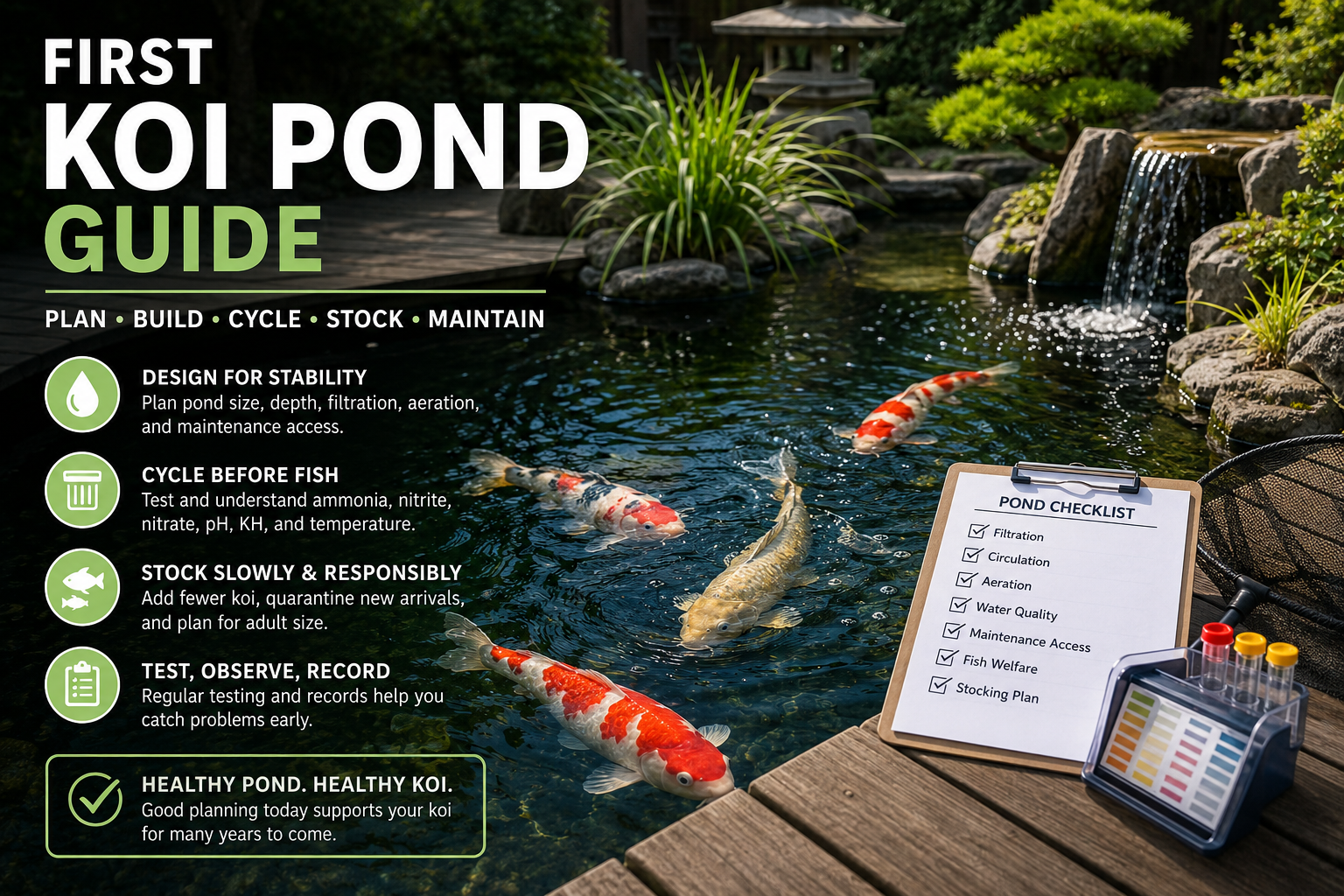
This first koi pond guide helps new keepers plan a safe, stable, and practical pond before buying fish. Good planning starts with water volume, filtration, oxygen, cycling, testing, and realistic stocking.
What This First Koi Pond Guide Covers
This page focuses on fish welfare, koi pond water quality, filtration, oxygen, maintenance access, pond cycling, quarantine, and responsible stocking. A beautiful garden pond is not enough if it cannot support healthy koi.
Water Volume
A beginner pond needs enough water volume to give the system stability. More water gives more margin, but pond size must still match filtration, oxygen, and stocking level.
Koi Pond Filtration
Good koi pond filtration removes solids and supports the biological bacteria that process ammonia and nitrite. Filtration should be planned before fish arrive.
Maintenance Access
The pond must be easy to test, clean, observe, feed, and manage. Poor access makes routine koi care harder and increases the risk of neglected problems.
Planning Sequence for Beginners
The safest beginner path is pond first, water stability second, fish third. Rushing this order often leads to ammonia, nitrite, stress, and preventable koi health problems.
- Design the SystemPlan pond size, depth, koi pond filtration, circulation, oxygen, safety, drainage, and maintenance access.
- Install and TestCheck pumps, air, pipework, filter flow, water returns, overflow, edges, and basic water readings before stocking.
- Cycle the PondUnderstand ammonia, nitrite, nitrate, pH, KH, temperature, and pond cycling before adding koi.
- Add Koi SlowlyStart with fewer fish than the pond could eventually hold. Quarantine new koi when possible.
- Keep RecordsTrack water readings, feeding, new fish, treatments, filter cleaning, and seasonal pond changes.
Essential Parts of a Koi Pond Setup
A koi pond guide should begin with the system, not the fish. Koi are long-lived, active, heavy-feeding fish, so the pond must be planned around their adult size and long-term care.
Depth and Safety
Depth helps protect koi from temperature swings and predators. Edges should be safe, stable, and easy to inspect.
Circulation
Good circulation moves waste toward the filter and prevents dead zones. Water returns, skimmers, drains, and pumps should work together.
Oxygen
Koi and filter bacteria both need oxygen. Air pumps, waterfalls, moving water, and good circulation support fish welfare and biological filtration.
Mechanical Filtration
Mechanical filtration removes visible waste before it breaks down. It should be easy to clean without disturbing biological media.
Biological Filtration
Biological filtration supports bacteria that convert ammonia and nitrite. This is one of the most important parts of a healthy koi system.
Water Testing Routine
The water should be tested regularly for ammonia, nitrite, nitrate, pH, KH, and temperature, especially during the first season.
Stocking a Beginner Koi Pond
Many new ponds are stocked too quickly. Small koi grow, filters need time to mature, and koi pond water quality can collapse when fish load rises faster than the system can handle.
- Buy fewer koi than you think the pond can hold.
- Plan for adult koi size, not shop size.
- Choose healthy fish from transparent sellers.
- Quarantine new koi when possible.
- Do not add many koi to a new pond at once.
- Increase feeding slowly while watching ammonia and nitrite.
- Keep water quality records after every new addition.
Water Quality Priorities
Success depends on stable water. Clear water is not the same as safe water, so regular testing should be part of beginner koi care from the start.
Ammonia
Ammonia comes from koi waste, uneaten food, and decaying material. It is especially important in new ponds and immature filters.
Nitrite
Nitrite can rise after ammonia begins to process. It is a common danger during pond cycling and filter instability.
KH and pH
KH helps buffer pH. Stable pH is important for koi health, biological filtration, and safe pond management.
Oxygen
Warm weather, heavy feeding, algae, and high stocking can increase oxygen demand. Strong aeration gives the pond more safety margin.
Temperature
Temperature affects feeding, metabolism, oxygen levels, filter activity, and disease risk. Beginners should learn seasonal pond behavior.
Records
Write down test results. A written pattern helps you see water quality problems before koi show serious stress.
Common Beginner Mistakes
Most early koi pond problems are avoidable. This first koi pond guide helps you slow down, test first, and build a system that can support koi for many years.
Buying Fish Too Early
Adding koi before the pond and filter are ready can create ammonia and nitrite problems very quickly.
Underestimating Filtration
Koi produce a lot of waste. Decorative pond filtration is often not enough for a real koi pond.
Overfeeding
Extra food becomes extra waste. Feed according to temperature, filter maturity, fish behavior, and water readings.
No Quarantine
New fish can bring parasites or disease. A quarantine routine protects the pond and gives you time to observe new koi.
No Maintenance Access
If filters, valves, drains, or pond edges are difficult to reach, routine koi care becomes harder and problems are more likely.
Trusting Clear Water
Clear water can still contain ammonia, nitrite, poor KH, or low oxygen. Testing is more reliable than appearance.
Buying Koi for a New Pond
Buying koi should come after the pond is stable. Choose fish that fit the pond, the filter, and your experience level. A responsible seller should be open about health, origin, quarantine, transport, and aftercare.
- Ask how long the koi have been held and observed.
- Look for clear skin, steady swimming, good body shape, and normal breathing.
- Avoid fish from tanks with obvious sores, flashing, gasping, or dead fish.
- Plan transport before buying koi.
- Do not mix many new koi into a young pond at once.
- Use quarantine when possible, especially for valuable or imported koi.
Health Caution for New Koi Keepers
If koi show severe stress, gasping, ulcers, clamped fins, isolation, heavy flashing, or sudden losses, test the water immediately and ask an experienced koi professional or qualified aquatic veterinarian for help. Serious koi health issues should not be handled by guesswork.
Q&A: First Koi Pond Guide
What should I plan first for a koi pond?
Start with pond size, depth, filtration, oxygen, circulation, maintenance access, and water quality testing. Fish should come after the system is stable.
Can I add koi as soon as the pond is filled?
No. A new pond needs testing and filter maturity. Adding koi too soon can lead to ammonia, nitrite, stress, and preventable health problems.
How many koi should a beginner buy?
Start with fewer koi than the pond could eventually hold. Stock slowly and plan for adult fish size, not the size of young koi in a shop.
What water tests matter most?
Ammonia, nitrite, nitrate, pH, KH, and temperature are the core tests. Oxygen and general pond behavior should also be watched closely.
Is a garden pond the same as a koi pond?
Not always. Koi need stronger filtration, more oxygen, better waste handling, and more careful stocking than many decorative garden ponds.
Should I quarantine new koi?
Yes, when possible. Quarantine helps protect the pond, gives time for observation, and reduces the risk of introducing parasites or disease.
Further Reading
Use these pages with this first koi pond guide to build around water stability, fish welfare, responsible stocking, and practical koi care.
Next Step
Before buying koi, make sure the pond can support them. Plan the system, test the water, understand filtration, and stock slowly.